Events

Dr. Milanova participated in the Forum on Cultural Diplomacy in the USA & the UN 2026
5 October 2026

Dr. Milanova participated in the Forum on Cultural Diplomacy in the USA & the UN 2026

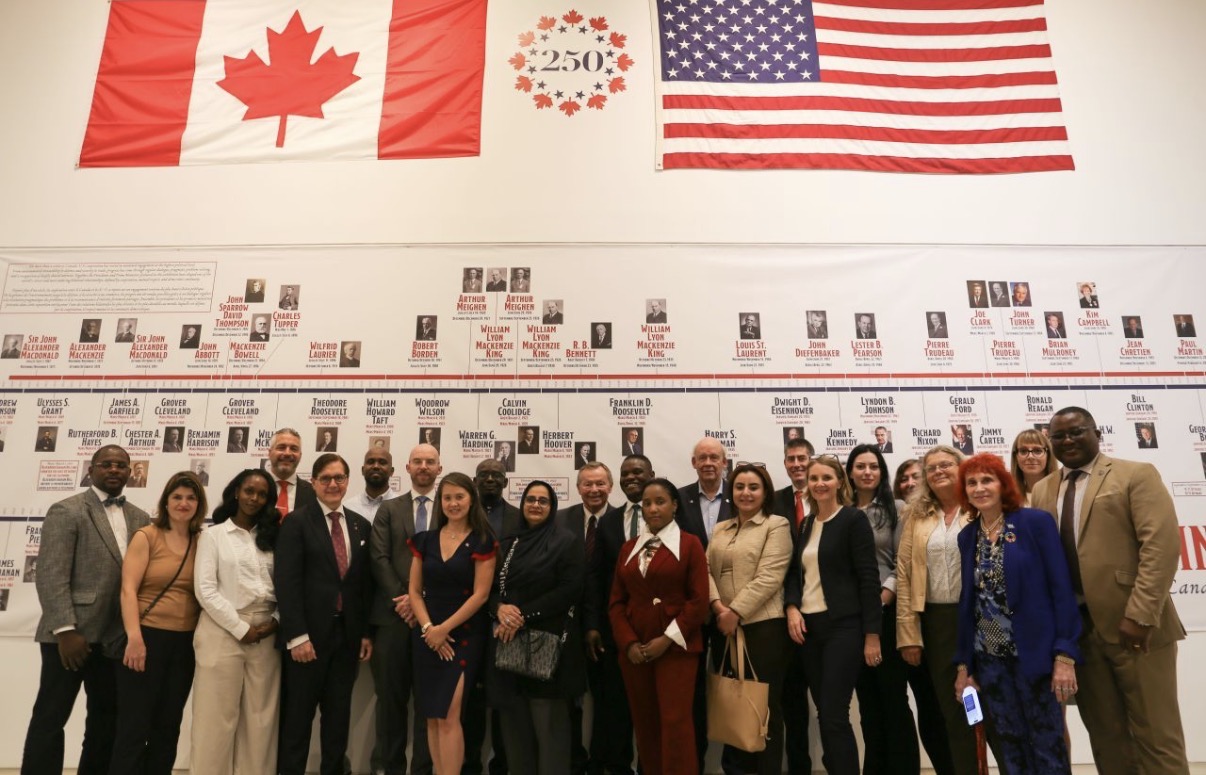
The project leader, Assist. Prof. Dr. Alexandra Milanova, took part in the International Forums on Cultural Diplomacy in the USA & the UN. She presented a paper entitled "Contested (hi)stories, shared futures: Advancing cultural diplomacy in the Balkans through the United Nations." The event, organized by the Institute for Cultural Diplomacy, took place from 5 to 8 October 2026 at the US Congress in Washington, D.C., and at UN Headquarters in New York. The Forum brought together diplomats, senators, members of Congress, representatives of the UN and UNESCO, scholars and university professors, as well as experts in cultural diplomacy and international cooperation from around the world, united by the understanding that culture is an effective means of building trust, preventing conflicts, and promoting understanding and cooperation.

Presentation of the edited volume “Cultural diplomacy and the Balkans: achievements and challenges in the present time”
19 March 2026

Presentation of the edited volume “Cultural diplomacy and the Balkans: achievements and challenges in the present time”

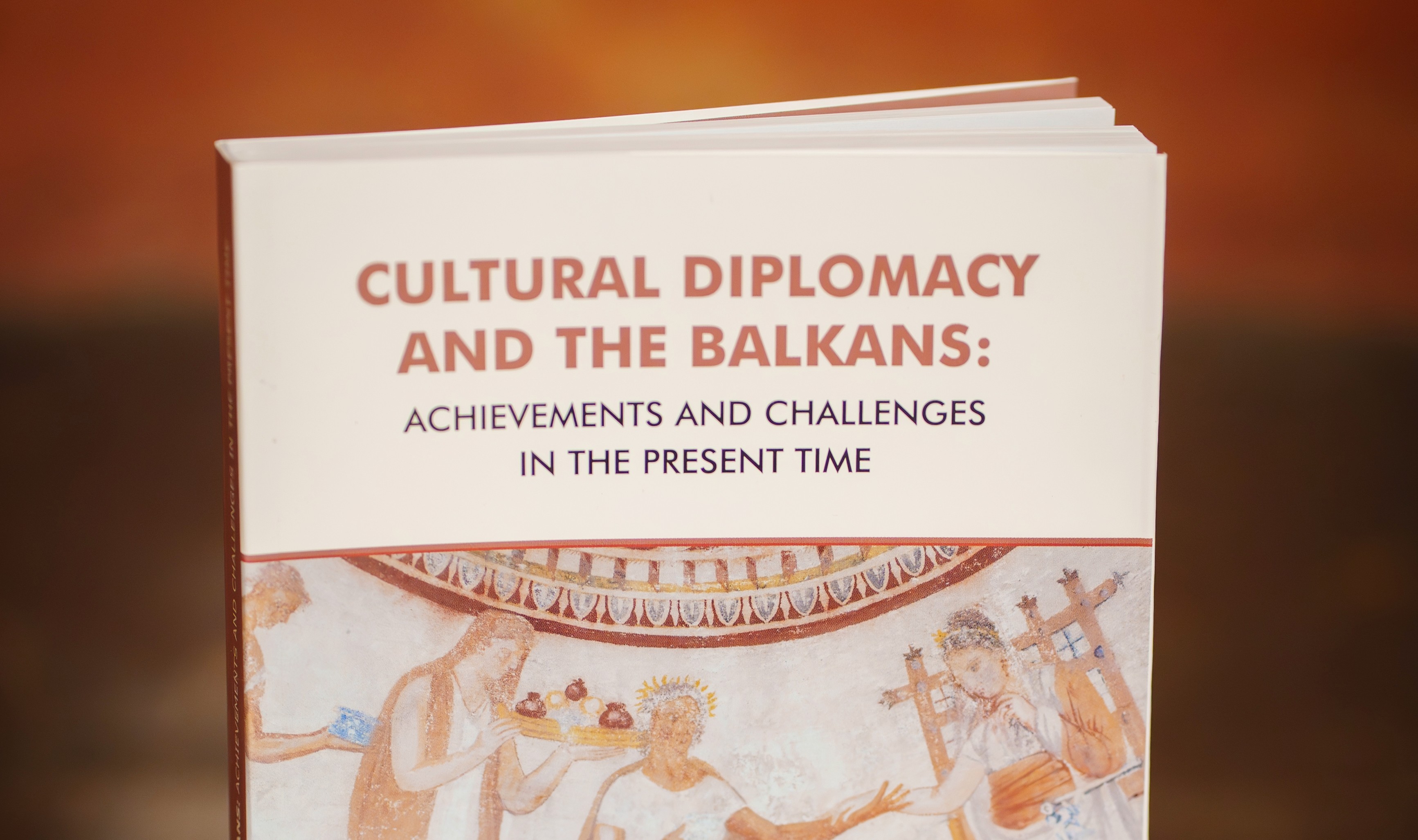
On 19 March 2026, the Institute of Balkan Studies & Centre for Thracology at the Bulgarian Academy of Sciences presented the volume “Cultural Diplomacy and the Balkans: Achievements and challenges in the present time” (ed. Alexandra Milanova, BAS Publishing House “Prof. Marin Drinov”, 2025) at the Aula of Sofia University “St. Kliment Ohridski”. The book is the outcome of the project “Cultural Diplomacy in the Balkans in the 20th and 21st Centuries: Achievements, Challenges, and the Way Forward”, funded by the Bulgarian National Science Fund of the Ministry of Education and Science. The volume was presented by the prominent diplomat and public figure Stefan Tafrov, while the event was moderated by Irina Nedeva, journalist at the Bulgarian National Radio. The event was attended by representatives of institutions involved in the development and implementation of cultural policies, members of the diplomatic corps, scholars, academics, and students. Mr Yavor Koynakov, Acting Director of the State Institute for Culture to the Minister of Foreign Affairs, delivered greetings on behalf of Ms Nadezhda Neynski, Minister of Foreign Affairs of the Republic of Bulgaria. Minister of Culture Nayden Todorov also expressed his appreciation for the efforts of the project team and the contributors to the volume. Special guests included Ms Milena Dimitrova, Secretary to the President for Education, Science and Culture; Dr Plamena Zayachka, Adviser to the Minister of Tourism; Ms Maria Todorova-Simova, Director General of the Inspectorate for the Protection of Cultural Heritage at the Ministry of Culture; Ms Tanya Mihaylova, Director of the Diplomatic Institute; and Prof. Dr Reneta Bozhankova, Vice-Rector for International Affairs at Sofia University, among others. The event served as a forum for bringing together experts and practitioners in the field of cultural diplomacy, foregrounding scholarly and interinstitutional dialogue on issues related to culture.

Lecture-discussion “Germany in dialogue: cultural exchange in a European context”
20 October 2025

Lecture-discussion “Germany in dialogue: cultural exchange in a European context”

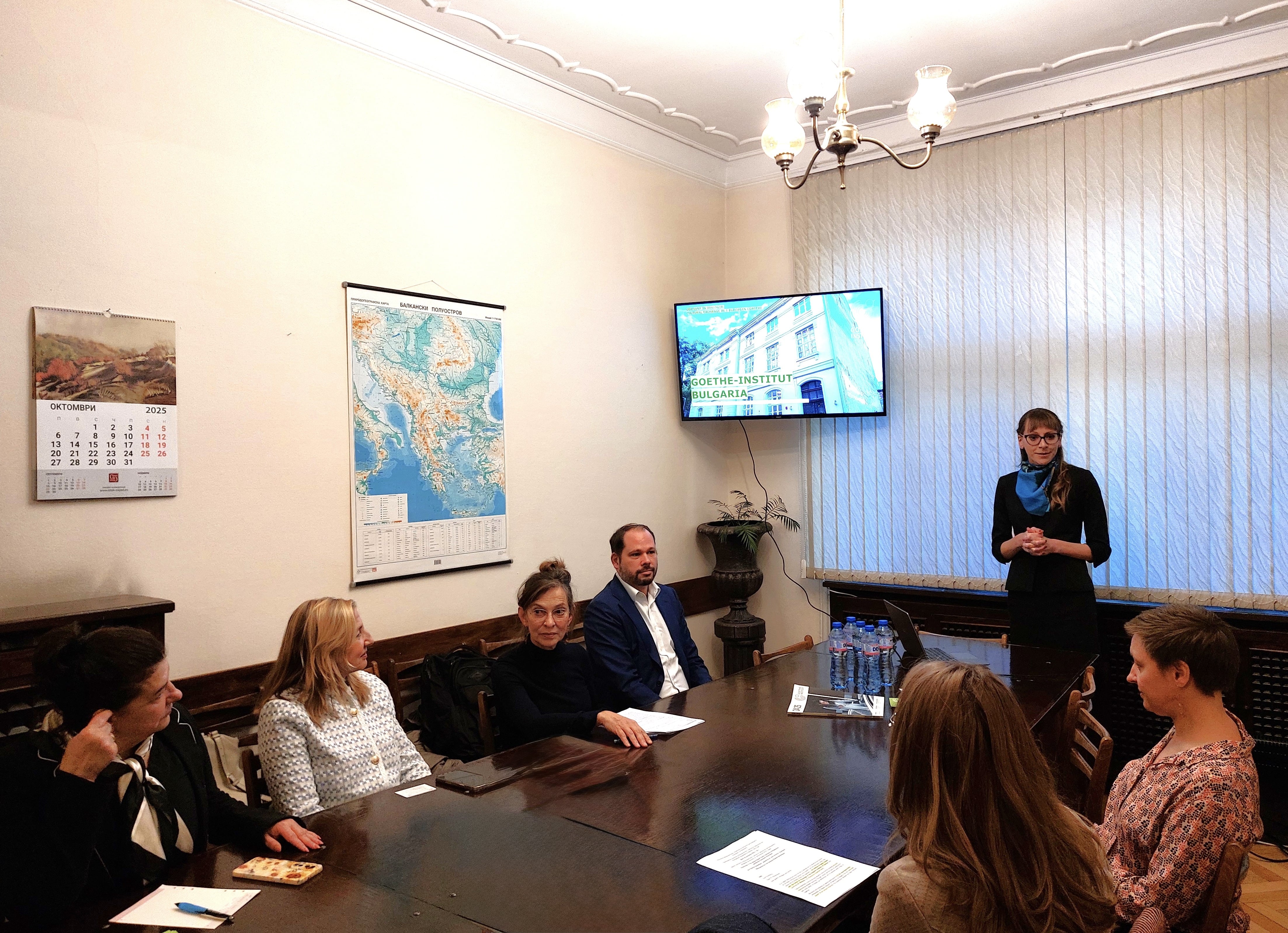
On October 20, 2025, a public lecture-discussion on the topic “Germany in Dialogue: Cultural Exchange in a European Context” was held at the Institute of Balkan Studies & Centre of Thracology at the Bulgarian Academy of Sciences (IBSCT-BAS). It is part of the series of events dedicated to cultural diplomacy in the Balkans, organized by the IBSCT-BAS in institutional partnership with the State Institute for Culture to the Minister of Foreign Affairs of the Republic of Bulgaria (DKI). The initiative is implemented under the Project “Cultural diplomacy in the Balkans in the 20th and 21st centuries: Achievements, challenges, and the way forward”, funded by the Bulgarian National Science Fund of the Ministry of Education and Science of the Republic of Bulgaria. The public lecture-discussion was opened by the Director of the IBSCT-BAS Prof. Dr. Roumiana Preshlenova and the Project Manager Assist. Prof. Dr. Alexandra Milanova, Scientific Coordinator of the IBSCT-BAS. Nia Tabakova welcomed those present on behalf of the director of the DKI Snezhana Yoveva-Dimitrova. Special guests and lecturers will be H.E. Irene Maria Plank, Ambassador of the Federal Republic of Germany to Bulgaria and Dr. Kirsten Hackenbroch, Director of Goethe-Institut Bulgaria. H.E. Irene Maria Plank spoke about the essence of cultural diplomacy in the contemporary world. Dr. Hackenbroch presented the diverse cultural activities of the Goethe-Institut in Bulgaria and Europe, as well as the successful initiatives within the framework of the European Union National Institutes for Culture (EUNIC). The event was attended by Assoc. Prof. Dr. Mariana Tien, Scientific Secretary of Department 9 "Man and Society", Mr. Yavor Koynakov, Chief Expert Coordination of International Cultural Projects at the DKI, Assoc. Prof. Dr. Albena Taneva, Head of the Department of Public Administration at the Faculty of Philosophy of Sofia University "St. Kliment Ohridski", Assoc. Prof. Dr. Boris Stoyanov from the Faculty of History of Sofia University, representatives of the cultural sector, scientists, lecturers, doctoral candidates and students.

Lecture-discussion “Greece's culture is far more than the Acropolis”
2 July 2025

Lecture-discussion “Greece's culture is far more than the Acropolis”

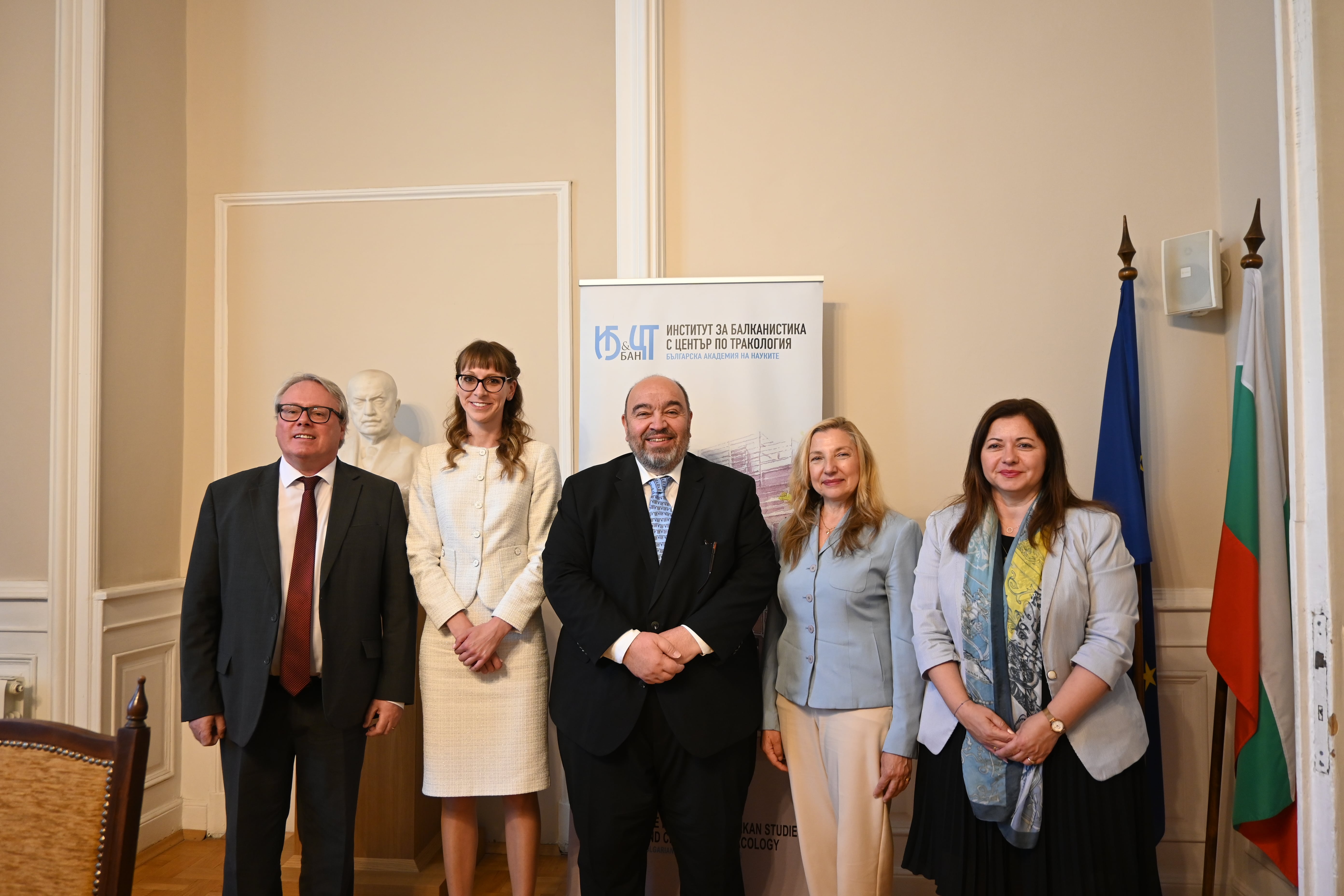
On July 2, 2025, a public lecture-discussion on the topic “Greece's culture is far more than the Acropolis” took place in the Acad. Ivan Geshov Hall of the Bulgarian Academy of Sciences. It was held in cooperation with the Embassy of the Republic of Greece in Bulgaria and is part of the series of events dedicated to cultural diplomacy in the Balkans, organized by the Institute of Balkan Studies & Centre of Thracology at the Bulgarian Academy of Sciences (IBSCT-BAS) in institutional partnership with the State Institute for Culture to the Minister of Foreign Affairs of the Republic of Bulgaria (DKI). The initiative is implemented under the Project “Cultural diplomacy in the Balkans in the 20th and 21st centuries: Achievements, challenges, and the way forward”, funded by the Bulgarian National Science Fund of the Ministry of Education and Science of the Republic of Bulgaria. The public lecture-discussion was opened by the Project Manager Assist. Prof. Dr. Alexandra Milanova, Scientific Coordinator of the IBSCT-BAS. The attendees were welcomed by Prof. Dr. Roumiana Preshlenova, Director of the IBSCT-BAS, and Ms. Snezhana Yoveva-Dimitrova, Director of DKI. The speaker at the event was H.E. Alexios Marios Liberopoulos, Ambassador of the Republic of Greece to Bulgaria. He introduced the attendees to the main aspects of Greek culture beyond the well-known symbols, briefly presented the contemporary cultural policy and diplomacy of Greece, as well as the country's participation in international cultural exchange, including within the framework of UNESCO. The lively discussion that followed touched on various topics related to scientific and university cooperation, tourism, the relationship between culture and security, and many others. Special guest was H.E. Joël Meyer, Ambassador of the Republic of France to Bulgaria. The event was attended by Assoc. Prof. Dr. Mario Ivanov, Scientific Secretary of Division 8 "Cultural-Historical Heritage and National Identity", Assoc. Prof. Dr. Mariana Tian, Scientific Secretary of Division 9 "Man and Society", Assoc. Prof. Dr. Albena Taneva, Head of the Department of Public Administration at the Faculty of Philosophy of Sofia University "St. Kliment Ohridski", journalists from the Bulgarian National Radio, representatives of the cultural sector, scholars, university professors, doctoral candidates, and students.
Lecture-discussion “The Polish public and cultural policy: a conversation about strategic approach, tools and backstage”
19 May 2025

Lecture-discussion “The Polish public and cultural policy: a conversation about strategic approach, tools and backstage”

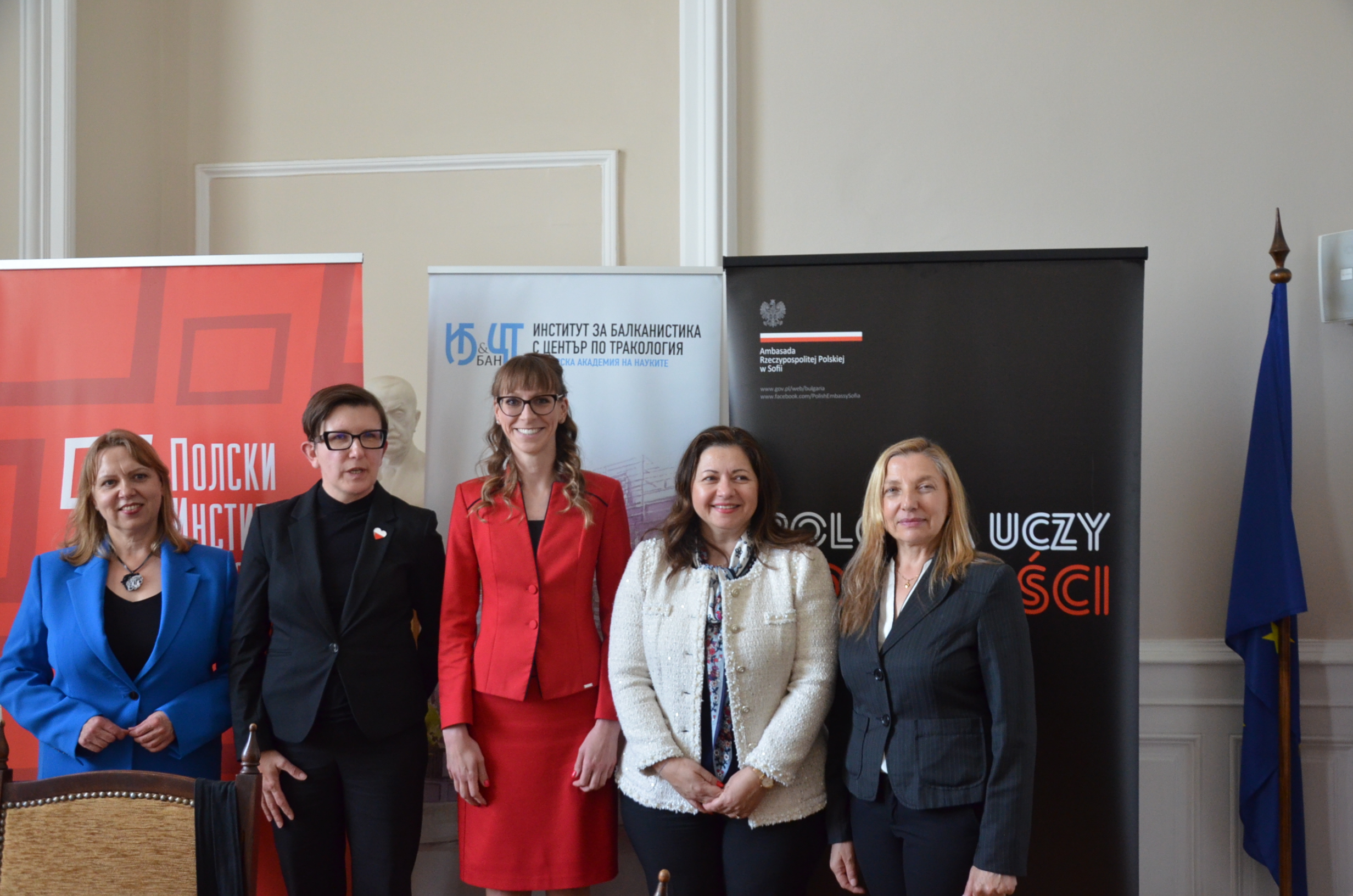
On May 19, 2025, a public lecture-discussion on the topic “The Polish public and cultural policy: А conversation about strategic approach, tools and backstage” was held in the Ivan Geshov Hall of the Bulgarian Academy of Sciences. This was the fifth in a series of events dedicated to cultural diplomacy in Bulgaria and the Balkans, organized under the Project “Cultural diplomacy in the Balkans in the 20th and 21st centuries: Achievements, challenges, and the way forward”, funded by the Bulgarian National Science Fund of the Ministry of Education and Science of the Republic of Bulgaria. The initiative is implemented by the Institute of Balkan Studies & Centre of Thracology at the Bulgarian Academy of Sciences (IBSCT-BAS) in partnership with the State Institute for Culture to the Minister of Foreign Affairs of the Republic of Bulgaria (DKI). The public lecture-discussion was opened by the Project Manager Assist. Prof. Dr. Alexandra Milanova, the Director of the IBSCT-BAS Prof. Dr. Roumiana Il. Preshlenova and the Director of DKI Ms. Snezhana Yoveva-Dimitrova. Special guests and lecturers were Mrs. Małgorzata Hejduk-Gromek, Minister-counsellor, Head of Consular and Polish Diaspora Section, Embassy of Poland in Bulgaria and Mrs. Iwona Jakuszko-Dudka, Director of the Polish Institute in Sofia. They presented in detail the numerous initiatives related to the Polish language, culture, literature, music and cuisine, held in various cities of Bulgaria in cooperation with local institutions and organizations. They also talked about the upcoming events until the end of the year. Their inspiring presentation was complemented by impressive videos, posters and various information materials. The lecture ended with a lively discussion and suggestions for future joint initiatives.

Lecture-discussion “Slovenian culture through my eyes: a personal perspective on cultural diplomacy”
8 April 2025

Lecture-discussion “Slovenian culture through my eyes: a personal perspective on cultural diplomacy”

On April 8, 2025, a public lecture-discussion on the topic “Slovenian Culture Through My Eyes: A Personal Perspective on Cultural Diplomacy” was held in the Ivan Geshov Hall of the Bulgarian Academy of Sciences. It is part of the series of events dedicated to cultural diplomacy in Bulgaria and the Balkans, organized by the Institute of Balkan Studies & Centre of Thracology at the Bulgarian Academy of Sciences (IBSCT-BAS) in partnership with the State Institute for Culture to the Minister of Foreign Affairs of the Republic of Bulgaria (DKI). The initiative is implemented as part of the Project “Cultural diplomacy in the Balkans in the 20th and 21st centuries: Achievements, challenges, and the way forward”, funded by the Bulgarian National Science Fund of the Ministry of Education and Science of the Republic of Bulgaria. The public lecture-discussion was opened by the Project Manager, Assist. Prof. Dr. Alexandra Milanova, Scientific Coordinator of the IBSCT-BAS. The Director of DKI Ms. Snezhana Yoveva-Dimitrova welcomed the attendees and highlighted the fruitful cooperation between the institute she leads and the Slovenian Embassy. She drew special attention to the Bulgarian-Slovenian exhibition "Bridges" presented in 2022 on the occasion of the 30th anniversary of the establishment of diplomatic relations between Bulgaria and Slovenia. Special guest and lecturer was H.E. Nataša Bergelj, Ambassador of the Republic of Slovenia to Bulgaria. She talked about the role of the Slovenian language and literature in the country's foreign policy, presented the most important cultural events held in Bulgaria since the beginning of her mandate, and emphasized the importance of the European Capital of Culture in 2025, which for the first time unites cities in two countries - Nova Gorica (Slovenia) and Gorizia (Italy). Ambassador Bergel's presentation sparked a lively discussion, in which journalists, scholars, university professors, doctoral candidates, and students participated.

Lecture-discussion “Bridging cultures: the Albanian view on cultural diplomacy”
11 March 2025

Lecture-discussion “Bridging cultures: the Albanian view on cultural diplomacy”

On March 11, 2025, a public lecture-discussion on the topic “Bridging Cultures: The Albanian View on Cultural Diplomacy” was held in the Ivan Geshov Hall of the Bulgarian Academy of Sciences. It is part of the series of events dedicated to cultural diplomacy in Bulgaria and the Balkans, organized by the Institute of Balkan Studies & Centre of Thracology at the Bulgarian Academy of Sciences (IBSCT-BAS) in partnership with the State Institute for Culture to the Minister of Foreign Affairs of the Republic of Bulgaria (DKI). The initiative is implemented as part of the Project “Cultural diplomacy in the Balkans in the 20th and 21st centuries: Achievements, challenges, and the way forward”, funded by the Bulgarian National Science Fund of the Ministry of Education and Science of the Republic of Bulgaria. The public lecture-discussion was opened by the Deputy Minister of Culture Assoc. Prof. Dr. Todor Chobanov, the Vice-President of the Bulgarian Academy of Sciences Prof. D.Sc. Emmanuel Moutafov and the Project Manager, Assist. Prof. Dr. Alexandra Milanova, Scientific Coordinator of the IBSCT-BAS. The attendees were welcomed by the Director of DKI Ms. Snezhana Yoveva-Dimitrova, who presented the successful cultural initiatives implemented between Bulgaria and Albania in the last years. Special guest and lecturer was H.E. Inid Milo, Ambassador of the Republic of Albania to Bulgaria. In her presentation, she drew attention to the potential of the so-called small countries in the field of cultural diplomacy. She presented the most significant cultural events organized by the Albanian Embassy in Bulgaria and spoke about the upcoming initiatives in 2025. Ambassador Milo's presentation was met with great interest and sparked a lively discussion. The event was attended by Assoc. Prof. Dr. Mario Ivanov, Scientific Secretary of the Cultural and Historical Heritage and National Identity Department of the Bulgarian Academy of Sciences, Prof. Dr. Roumiana Il. Preshlenova, Director of IBSCT-BAS, Dr. Bobi Bobev, Ambassador of the Republic of Bulgaria to Albania (1998–2006) and Kosovo (2010–2014), Mr. Yavor Koynakov, Senior Expert, Coordination of International Cultural Projects at DKI, scholars, university professors and students of the Balkan Studies major at Sofia University “St. Kliment Ohridski”.

Lecture-discussion “The soft power of cultural diplomacy”
25 February 2025

Lecture-discussion “The soft power of cultural diplomacy”

On February 25, 2025, the second of a series of public lectures-discussions dedicated to cultural diplomacy in Bulgaria and the Balkans was held in the Ivan Geshov Hall of the Bulgarian Academy of Sciences. It was organized by the Institute of Balkan Studies & Centre of Thracology at the Bulgarian Academy of Sciences (IBSCT-BAS) in partnership with the State Institute for Culture to the Minister of Foreign Affairs of the Republic of Bulgaria (DKI). The initiative is implemented as part of the Project “Cultural diplomacy in the Balkans in the 20th and 21st centuries: Achievements, challenges, and the way forward”, funded by the Bulgarian National Science Fund of the Ministry of Education and Science of the Republic of Bulgaria. The event was opened by the Vice-President of the Bulgarian Academy of Sciences Prof. D.Sc. Emmanuel Moutafov and by the Project Manager Asst. Prof. Dr. Alexandra Milanova affiliated with the IBCTS-BAS. A greeting on behalf of the Director of the DKI Ms. Snezhana Yoveva-Dimitrova, was delivered by Mr. Iliyan Lolugov, Head of the Cultural Policy Department. The event was also attended by H.E. Inid Milo, Ambassador of the Republic of Albania to Bulgaria and Assoc. Prof. Dr. Mario Ivanov, Scientific Secretary of the Cultural and Historical Heritage and National Identity Department. Special guest and lecturer was H.E. Jasna Ognjanovac, Ambassador of the Republic of Croatia to Bulgaria. She made a presentation on the topic “The Soft Power of Cultural Diplomacy”, which was met with great interest by the audience and sparked a lively discussion. During the event, special attention was paid to the exhibition Croats and Bulgarians through the Ages. Cultural Diplomacy and Interacademic Cooperation/Hrvati i Bugari kroz stoljeća. Kulturna diplomacija i međuakademska suradnja, prepared under the above-mentioned project. Last year, it was presented in the central foyer of the Bulgarian Academy of Sciences and in the Ministry of Foreign Affairs of the Republic of Bulgaria on the occasion of the Day of the Bulgarian Diplomatic Service. In May 2025, the exhibition will be inaugurated at the Croatian Academy of Sciences and Arts in Zagreb and in other cities in Croatia.

Lecture-discussion “Cultivating influence: cultural diplomacy between France and Bulgaria”
7 February 2025

Lecture-discussion “Cultivating influence: cultural diplomacy between France and Bulgaria”

On February 7, 2025, a public lecture-discussion entitled “Cultivating influence: Cultural diplomacy between France and Bulgaria” was held in the Ivan Geshov Hall of the Bulgarian Academy of Sciences. It was organized by the Institute of Balkan Studies & Centre of Thracology at the Bulgarian Academy of Sciences (IBSCT-BAS) in partnership with the State Institute for Culture to the Minister of Foreign Affairs of the Republic of Bulgaria (DKI). This is the first in a series of events dedicated to cultural diplomacy in Bulgaria and the Balkans, which are being implemented under the project “Cultural Diplomacy in the Balkans in the 20th and 21st Centuries: Achievements, Challenges and the Way Forward”, funded by the Bulgarian National Science Fund of the Ministry of Education and Science. The Vice President of the Bulgarian Academy of Sciences, Corresponding Member Prof. Dr. B.Sc. Evdokia Pasheva opened the forum and greeted participants and guests – representatives of the diplomatic corps and the cultural sector, established and young scholars, doctoral candidates and students. The Director of IBSCT-BAS Prof. Dr. Roumiana Preshlenova also addressed the attendees. The initiator and moderator of the event was Asst. Prof. Dr. Alexandra Milanova, Scientific Coordinator of the IBSCT-BAS and Head of the project. The Director of the DKI Mrs. Snezhana Yoveva-Dimitrova emphasized the fruitful cooperation between the institute she leads and IBSCT-BAS in recent years, prime example of which was the international conference “Cultural Diplomacy and the Balkans: Achievements and Challenges in the Present Time”, held on October 23, 2024 at the National Gallery. Special guests and speakers of the event were H.E. Joël Meyer, Ambassador of France to Bulgaria and Mr. Luc Lévy, Counsellor for Cooperation and Cultural Action and Director of the French Institute in Sofia. They presented the evolution of the French concept of cultural diplomacy, pointed out specific initiatives and individuals who have contributed most to the promotion of the French language and culture in Bulgaria and of Bulgarian culture in France, and noted the challenges facing cultural diplomacy in the contemporary world. The event was held in the context of the 60th anniversary of the signing of the first agreement between the Bulgarian Academy of Sciences and the French National Center for Scientific Research (CNRS). It is expected that the bilateral agreement between the two institutions will be renewed later this year, which will provide new opportunities for scientific cooperation.

The international conference “Cultural diplomacy and the Balkans" brought together prominent speakers from four continents
23 October 2024

The international conference “Cultural diplomacy and the Balkans" brought together prominent speakers from four continents

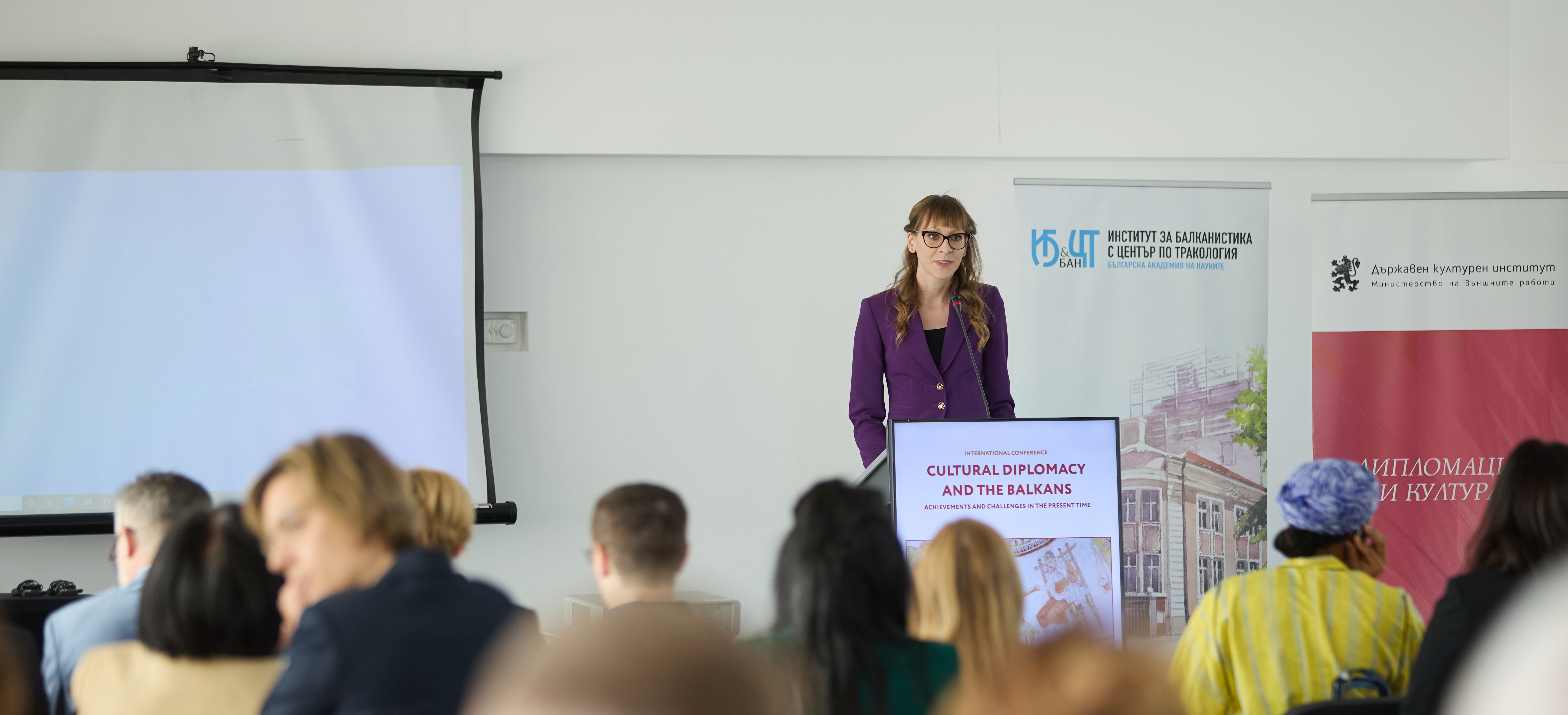
On October 23, 2024, the international conference "Cultural diplomacy and the Balkans: Achievements and challenges in the present time" was held in the Panoramic Hall of the National Gallery - Kvadrat 500. It was organized by the Institute of Balkan Studies & Centre of Tracology at the Bulgarian Academy of Sciences with the support of the Ministry of Culture and in institutional partnership with the State Institute for Culture to the Ministry of Foreign Affairs of the Republic of Bulgaria and the National Gallery. The event was realized under the project “Cultural diplomacy in the Balkans in the 20th and 21st centuries: Achievements, challenges, and the way forward”, led by Assist. Prof. Dr. Alexandra Milanova and funded by the Bulgarian National Science Fund of the Ministry of Education and Science, Official media partner of the event was the Bulgarian News Agency. The Minister of Culture Nayden Todorov opened the international conference and emphasized the importance of the topic in the present times, in which diplomacy is clearly experiencing severe difficulties. He emphasized that the best way to overcome the many conflicts is by raising our own culture. The Deputy Minister of Foreign Affairs, Nevyana Miteva, greeted the organizers and guests of the event on behalf of the Minister of Foreign Affairs, Ivan Kondov. In her speech, she pointed out that cultural diplomacy is among the most effective, but also underused tools of foreign policy. The Director of the National Gallery, Mrs. Yaroslava Bubnova, recalled that there is no museum that was built without the skills of diplomacy, the capabilities of negotiators and the basic idea that the world is much bigger than the place we are in. The international forum brought together participants from four continents, most of whom are visiting Bulgaria for the first time. Among them are Andrew Manning, Director of the European Union National Institutes for Culture (EUNIC), Prof. Maryam Majid Al Saad, Secretary General of the Global Public Diplomacy Network (GPDNet), Aisha Adamu Augie, Director General of the Center for Black and African Arts and Civilization (CBAAC) at the Ministry of Arts, Culture and Creative Economy of the Federal Republic of Nigeria, representatives of the academic community, the cultural sector and private initiatives.